
Vital Summary
- Frequency Balance: White noise uses equal power across all frequencies, while Pink noise scales power to mimic natural environments.
- The Flow Trigger: Pink noise is often perceived as “soother” and more effective at sustaining focus during complex tasks.
- Sound Masking: Both sounds work by raising the “noise floor,” making sudden external distractions less jarring to the brain.
- Individual Variation: The “best” soundscape often depends on your specific environment and the type of work you are performing.
Quick Answer
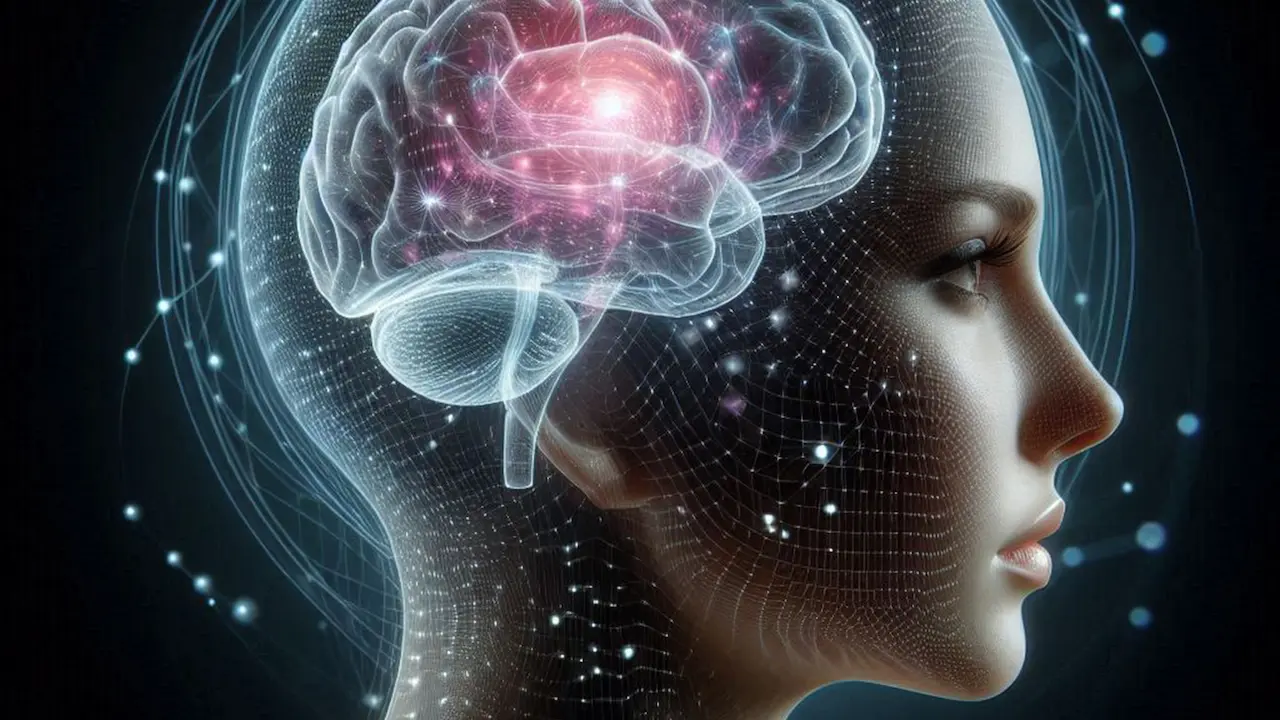
While White noise is effective at masking high-pitched, erratic distractions (like a construction site), Pink noise is scientifically linked to improved “Neural Entrainment.” Because Pink noise emphasizes lower frequencies, it more closely aligns with the brain’s natural electrical rhythms. This reduces cognitive load during deep work, allowing the prefrontal cortex to maintain focus for longer periods without the fatigue often associated with the “static” hiss of White noise.
The Science of Soundscapes
To understand why one sound helps you code while another just feels like “static,” we have to look at how sound power is distributed across the frequency spectrum.
1. White Noise (The Wall of Sound)
White noise contains all frequencies that the human ear can hear, played at the same intensity. Think of it like the “snow” on an old television. Because it covers the entire audible spectrum, it is the ultimate “masker.” Research in Scientific Reports suggests that White noise is highly effective for people with ADHD or those in extremely loud environments because it creates a consistent sensory shield.
2. Pink Noise (The Natural Slope)
Pink noise also contains all frequencies, but the power per octave decreases as the frequency increases. This creates a “bassier” or deeper sound, resembling falling rain, rustling leaves, or a steady wind. This $1/f$ power spectrum is found everywhere in nature and in the human heart and brain. A study published in Frontiers in Human Neuroscience found that Pink noise can actually synchronize brain waves, specifically during sleep and focused cognitive tasks.
3. Stochastic Resonance
Both types of noise utilize a phenomenon called Stochastic Resonance. This occurs when a certain amount of “background hum” actually helps the brain pick up on subtle signals—in this case, your own thoughts. By providing a steady stream of non-threatening data to the auditory cortex, the brain stops “searching” the room for distractions.
What This Means for You
In a practical sense, choosing between Pink and White noise is about managing your “cognitive fatigue.”
Imagine you are in a library where someone is whispering and another person is tapping a pen. White noise acts like a thick, heavy curtain; it blocks everything out, but the “hiss” can eventually feel abrasive, like a constant pressure on your eardrums.
Pink noise, on the other hand, feels more like a background environment. It’s the sound of a steady rainstorm outside your window. It doesn’t just block the pen-tapping; it blends it into a natural-sounding texture. For most people engaged in Deep Work—where you need to hold complex ideas in your mind—Pink noise is less “taxing” on the brain over 2–3 hour sessions.
Choosing Your Focus Frequency
| Person Type | What to consider | Why it’s supported by evidence |
| The Creative / Writer | Pink Noise | Lower frequencies are less “sharp,” allowing for more fluid internal thought processes. |
| The Data Entry / Admin | White Noise | The high-frequency “wall” is better at masking the specific, repetitive clicks of an office. |
| The Beginner | Brown Noise | Even deeper than Pink, Brown noise mimics a heavy rumble (like a plane cabin) and is often the easiest to “ignore.” |
The Deep Work Sound Protocol
- Match the Environment: If your room is “sharp” (clinking dishes, high voices), start with White noise. If your room is “echoey” or too quiet, start with Pink noise.
- The Volume Threshold: Set the volume just loud enough to mask external sounds, but no louder. Excessive volume triggers a “threat” response in the amygdala, negating the focus benefits.
- The 5-Minute Onboarding: Don’t switch sounds every minute. Give your brain five minutes to “entrain” to the frequency. Most people stop “hearing” the noise entirely after this period.
How to start based on your lifestyle:
- If you’re busy: Use a “one-click” site like Noisli or mynoise.net. Don’t waste time fine-tuning; just hit “Rain” (Pink) or “Static” (White).
- If you’re serious: Invest in high-quality noise-canceling headphones. The combination of active cancellation and Pink noise creates a near-perfect “focus bubble.”
- If you’re a beginner: Start with “Brown Noise” or “Rain” on YouTube. It’s the most approachable “colored noise” for those who find White noise annoying.
Pros and Cons of Sound Masking
Pros:
- Instant Habit Trigger: Using the same soundscape every time you work creates a powerful psychological cue for focus.
- Privacy: Prevents you from being distracted by (or overheard by) others in a shared space.
- Lower Stress: Masks the “startle” response caused by sudden, loud noises.
Cons:
- Dependency: You may find it harder to focus in “true silence” once you are used to the hum.
- Auditory Fatigue: Listening to any sound through headphones for 8+ hours can cause physical ear discomfort.
- Social Disconnection: You may miss important cues or calls from people in your physical environment.
FAQ
Can I just listen to music instead?
Music with lyrics or complex melodies often competes for the same “verbal processing” centers in your brain as your work. For Deep Work, non-melodic noise is almost always superior to music.
Is Pink noise better for sleep too?
Yes. Emerging research suggests that Pink noise can enhance “Slow Wave Sleep,” which is the stage responsible for memory consolidation and physical recovery.
Final Takeaway
While White noise is a powerful tool for blocking out a chaotic world, Pink noise is the hidden champion of Deep Work. By mimicking the frequency patterns of the natural world, Pink noise allows the brain to settle into a state of focused calm without the sensory irritation of higher-pitched sounds. If you find yourself “tired” after a day of using white noise, try shifting your soundscape toward the deeper, more natural frequencies of Pink noise.
References
- Scientific Reports (2017). White noise and its effects on cognitive performance. Direct Link
- Frontiers in Human Neuroscience (2012). Pink noise: Effect on sleep and memory. Direct Link
- Journal of Cognitive Neuroscience (2015). Stochastic resonance in the human auditory system. Direct Link