Vital Summary
- The Blue Light Conflict: Digital screens emit short-wavelength light that tricks the brain into thinking it is daytime.
- Melatonin Suppression: Just 30–60 minutes of screen use can delay the release of sleep hormones by up to two hours.
- Cognitive Alertness: The “interactive” nature of phones keeps the brain in a state of high arousal, preventing deep sleep.
- The Optimal Window: Scientific consensus points to a 90–120 minute “digital sunset” for peak sleep quality.
Quick Answer
The 2-hour rule suggests disconnecting from digital screens 120 minutes before sleep. This window allows the brain’s pineal gland to release melatonin—the hormone responsible for sleepiness—without being suppressed by blue light. By avoiding screens, you lower your core body temperature and heart rate, transitioning the nervous system from “alert” to “rest,” ensuring faster sleep onset and better REM quality.
The Science of the Digital Sunset
The human body operates on a 24-hour internal clock known as the Circadian Rhythm. This rhythm is primarily regulated by light exposure. When specialized cells in our eyes detect the dimming light of evening, they signal the brain to begin producing Melatonin.+2
Digital screens (phones, tablets, and LED TVs) emit a concentrated amount of Blue Light ($450-490$ nm). This specific wavelength is highly effective at suppressing melatonin because it mimics the peak brightness of mid-day sunlight. Research from institutions like Harvard Medical School suggests that blue light exposure in the evening can shift the circadian rhythm by as much as 3 hours.
Beyond the light itself, there is the factor of “Cognitive Stimulation.” Unlike a book, digital content is often designed to trigger dopamine loops. Checking an email or scrolling through a feed triggers the Reticular Activating System (RAS), the part of the brain that keeps us awake and vigilant.+1
Evidence Strength: Well-established regarding blue light’s impact on melatonin; emerging research regarding the specific “interactive” psychological arousal of social media vs. passive media.
What This Means for You
We have all been there: you intend to check “just one thing” on your phone at 10:00 PM. Suddenly, it’s 10:45 PM, your mind is racing with news or social updates, and despite feeling “tired,” you no longer feel “sleepy.” This is the gap between physical exhaustion and neurological readiness.
When you ignore the 2-hour rule, you aren’t just losing minutes of sleep; you are lowering the quality of the sleep you eventually get. Your brain stays in a lighter stage of sleep for longer, trying to process the stimulation it received right before the lights went out. You wake up feeling “hungover” by your own devices.
The Logistics of Disconnecting
| Person Type | What to consider | Why it’s supported by evidence |
| The Busy Executive | “Night Shift” mode or Blue Light filters. | Partial reduction in blue light is better than none, though it doesn’t stop mental arousal. |
| The Serious Biohacker | Total 120-minute blackout. | Maximizes the natural melatonin curve and lowers evening cortisol. |
| The Beginner | The 30-minute “Buffer.” | Easier to maintain; allows for a gradual habit shift without “scarcity” anxiety. |
Simple Action Plan: Implementing the 2-Hour Rule
Transitioning away from screens doesn’t have to feel like a chore. It is about creating a “low-energy” environment that signals safety to your brain.
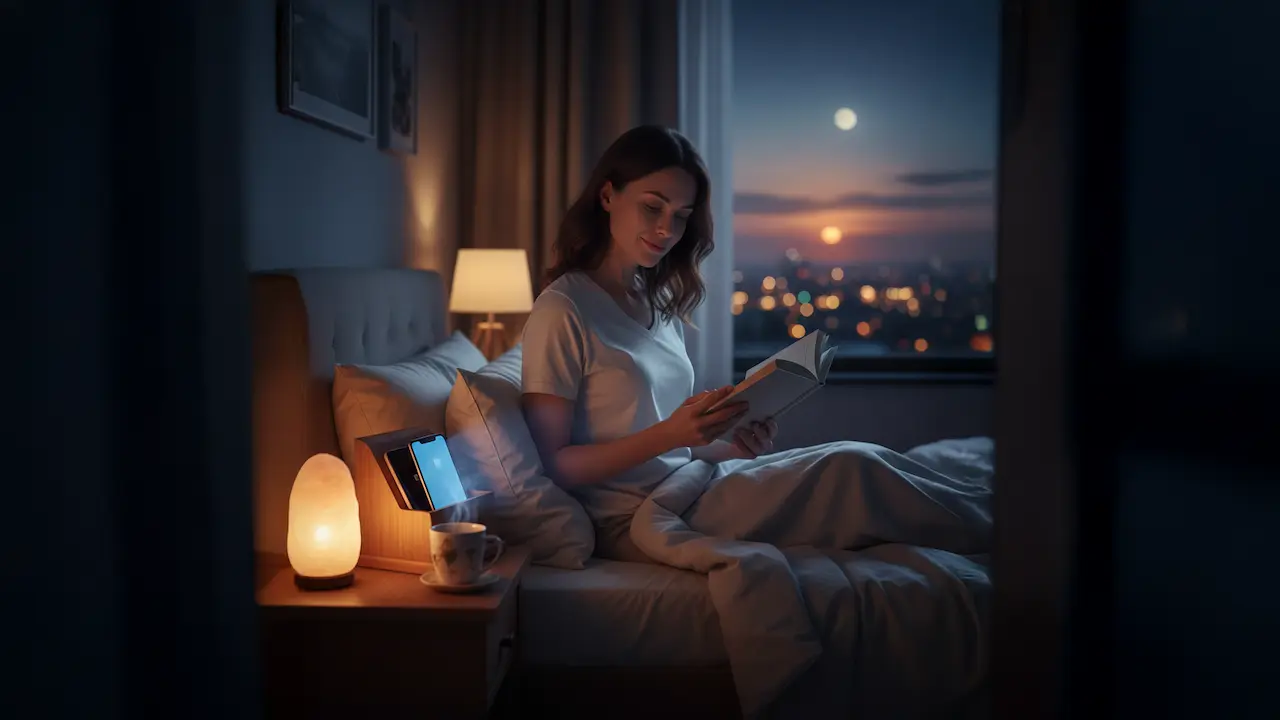
- The 90-Minute Alarm: Set a “digital sunset” alarm on your phone. When it goes off, finish your last email or text and put the device in a charging station outside the bedroom.
- Dim the Environment: If you must have lights on, use warm, dim lamps rather than overhead LED lighting. This mimics the natural glow of a setting sun.
- Analog Alternatives: Replace the scroll with a low-stakes activity. Reading fiction, light stretching, or listening to a podcast (audio only) provides the entertainment your brain craves without the visual stimulation.
How to Start
- If you’re busy: Aim for at least 30 minutes of no screens. Use this time for hygiene and tomorrow’s prep.
- If you’re serious: Adopt the full 120-minute rule. Use the time for deep hobbies, meditation, or conversation.
- If you’re a beginner: Turn on “Grayscale mode” on your phone 2 hours before bed. Making the screen boring reduces the urge to stay on it.
Pros & Cons of the 2-Hour Rule
Pros:
- Significant increase in Deep Sleep and REM cycles.
- Reduced morning grogginess (sleep inertia).
- Improved long-term eye health by reducing digital eye strain.
Cons:
- Social Friction: May be difficult if your family or partner is still using devices.
- Initial Boredom: The brain may feel “under-stimulated” for the first 3-5 nights as it adjusts to lower dopamine levels.
- Inconvenience: Requires planning for tasks like setting alarms or checking schedules.
FAQ
Do blue light glasses work?
They can help block some wavelengths, but they do not address the mental stimulation of using a device. They are a tool, not a total solution for late-night scrolling.
Is watching TV from a distance as bad as a phone?
Generally, no. A TV is further away and usually “passive,” whereas a phone is close to the eyes and “interactive” (requiring clicking/scrolling), which causes more brain arousal.
Final Takeaway
The 2-hour rule is a science-based strategy to align your modern lifestyle with your ancient biology. By avoiding screens 120 minutes before bed, you prevent blue light from suppressing melatonin and allow your nervous system to downregulate. This results in faster sleep onset, improved restorative sleep stages, and higher energy levels the following day.