Vital Summary
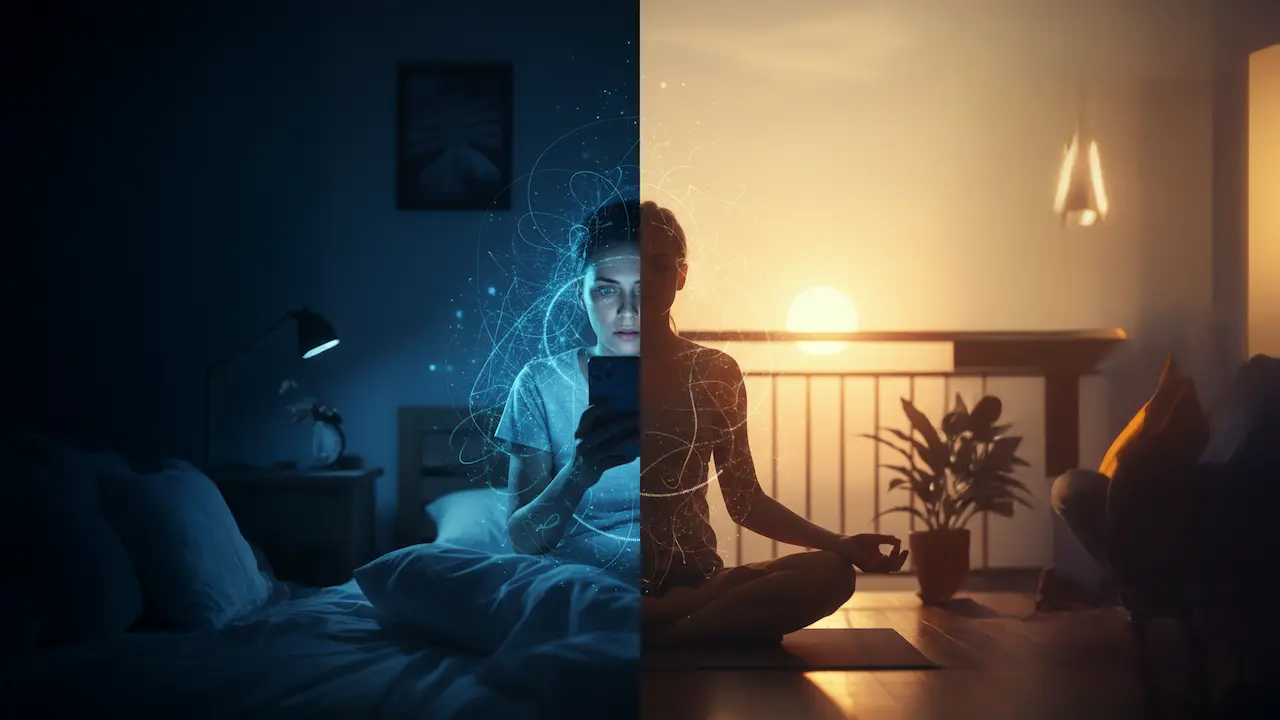
- Melatonin Blockade: Blue light mimics daylight, tricking the brain into suppressing the sleep hormone melatonin.
- The Dopamine Hit: Engaging with digital content triggers small dopamine releases that mask physical exhaustion.
- Hyperarousal State: This combination keeps the nervous system in “high alert,” making relaxation feel physically impossible.
- Cumulative Anxiety: Poor sleep-wake signaling increases cortisol, leading to higher baseline anxiety the following morning.
Quick Answer
Blue light from screens stimulates melanopsin-sensitive cells in the retina, which signal the brain’s master clock to inhibit melatonin and maintain alertness. When paired with the dopamine-driven “reward” of scrolling, the body enters a state of physiological hyperarousal. This disrupts the circadian rhythm, preventing the nervous system from transitioning into a calm, restorative state and fueling a cycle of chronic evening anxiety.
The Science Behind the Loop
The “anxiety loop” isn’t just in your head; it is a measurable biological response to artificial light and digital stimulation. To understand why your phone makes you feel anxious, we have to look at how light dictates our internal chemistry.
1. The Circadian Signal
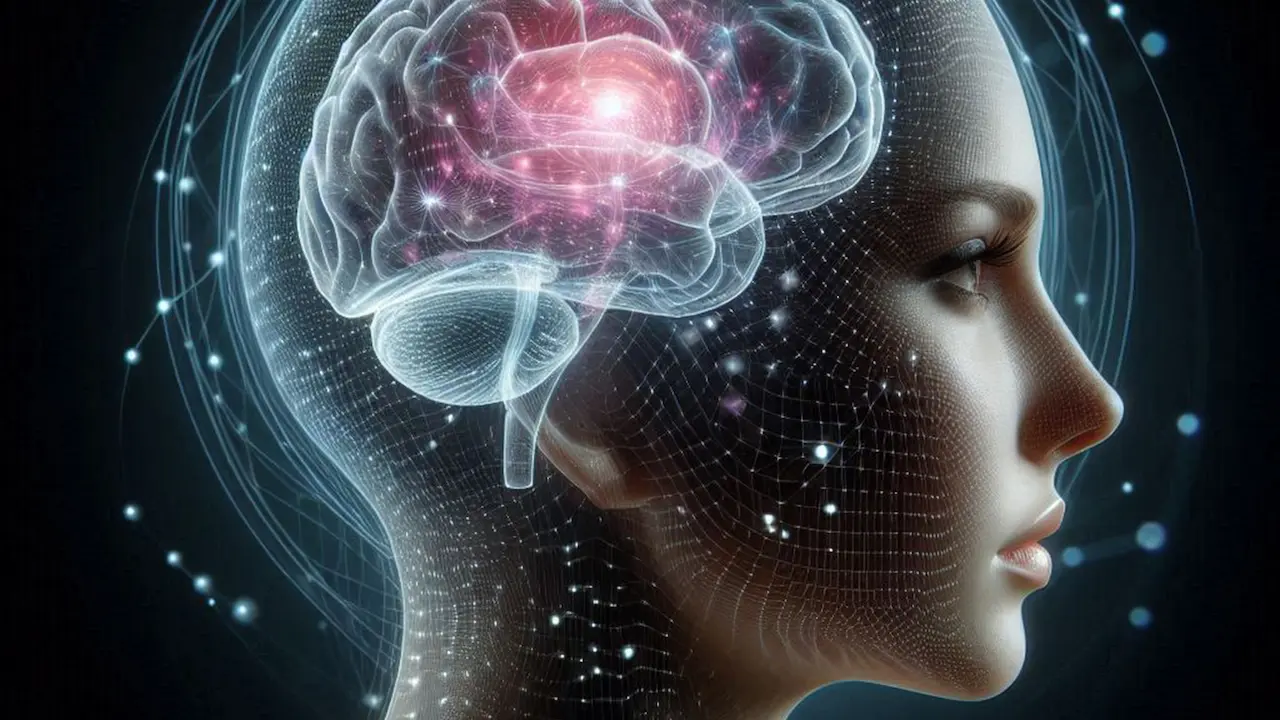
The human eye contains specialized cells called intrinsically photosensitive Retinal Ganglion Cells (ipRGCs). These cells are most sensitive to blue light ($460$–$480$ nm). When they detect this wavelength, they send a direct signal to the Suprachiasmatic Nucleus (SCN)—the brain’s command center for timekeeping. The SCN tells the pineal gland to stop producing melatonin, the hormone that lowers blood pressure and prepares the body for rest.
2. The Dopamine-Seeking Circuit
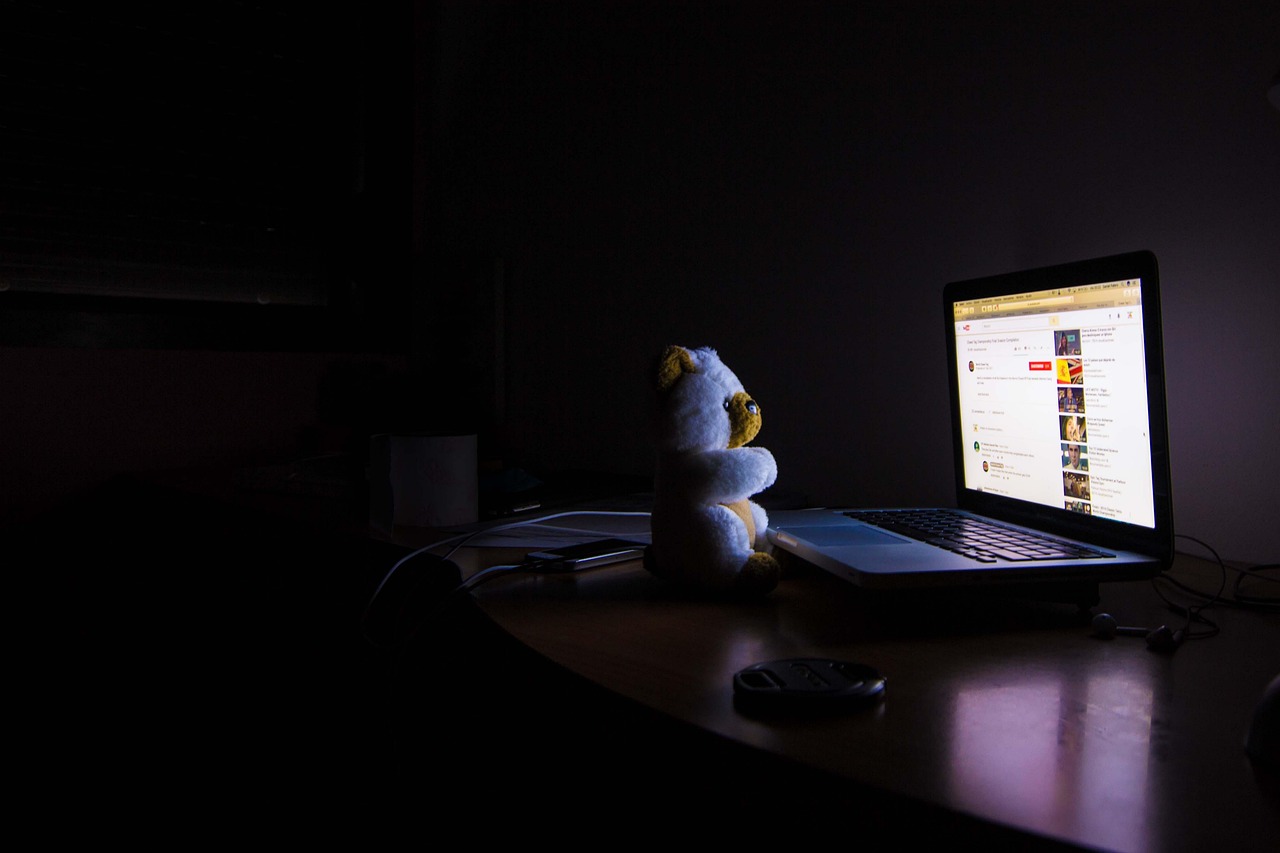
As melatonin drops, your brain stays “online.” To fill this alert state, we often turn to “micro-achievements”—scrolling a feed, checking a notification, or watching a short video. Each of these triggers a pulse of Dopamine, the neurotransmitter associated with motivation and “seeking.” This creates a feedback loop: the blue light keeps you awake, and the dopamine makes staying awake feel rewarding, even when your body is physically depleted.
3. Cortisol and the “Wired” Feeling
According to research from Harvard Medical School, suppressing melatonin doesn’t just keep you awake; it can cause a “phase shift” in your circadian rhythm. This often leads to an inappropriate spike in Cortisol (the stress hormone) late at night. Instead of your nervous system entering the “Rest and Digest” (parasympathetic) state, it stays trapped in “Fight or Flight” (sympathetic) mode.
What This Means for You
In daily life, this feels like a strange, buzzing restlessness. You might be exhausted after a long day, yet as soon as you lie down with your phone, you feel a second wind. It’s that familiar moment where you tell yourself, “Just five more minutes,” only to realize an hour has passed and your heart is beating faster than it was when you first got into bed.
This is the “scroll-hook” in action. You aren’t scrolling because you’re interested; you’re scrolling because your brain is too “bright” to shut down, and the digital world provides the only stimulation fast enough to match your over-active internal state. By the time you finally put the phone away, the silence of the room feels heavy and anxious because your nervous system is still revved up to $100$ mph.
Visual Logic: How Different Users Experience the Loop
| Person Type | What to consider | Why it’s supported by evidence |
| The Busy Professional | “Revenge Bedtime Procrastination” | Using screens to reclaim “personal time” keeps the brain in a high-stress work mode. |
| The Serious Student | Memory and Cognitive Load | Blue light interference reduces REM sleep, which is critical for processing the day’s information. |
| The Beginner | General Physical Tension | Even 15 minutes of late-night light can delay the body’s internal clock by over an hour. |
The 1-2-3 Action Plan to Break the Loop
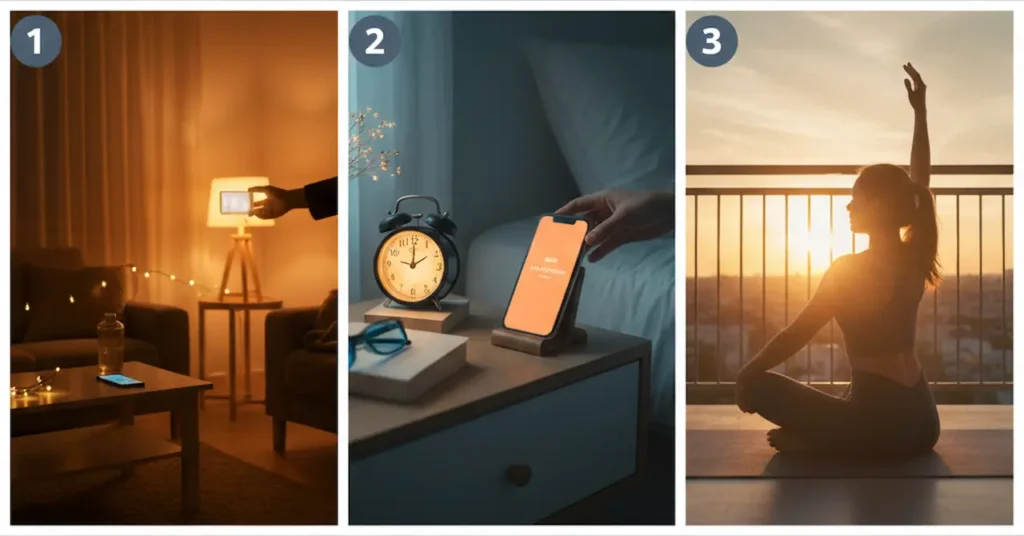
- The Digital Sunset: Set a “hard stop” for screens 60 minutes before bed. If you must use a screen, use a dedicated blue-light-filtering app that shifts the display to a deep orange hue.
- Replace the Dopamine: Swap the “scrolling” reward for a low-dopamine activity like reading a physical book, journaling, or using a dedicated e-reader with an e-ink display (which does not emit the same intensity of blue light).
- Light Anchoring: In the morning, get 10 minutes of natural sunlight. This “anchors” your clock, making your brain more sensitive to the natural drop in light later that evening.
Tailored Approaches:
- If you’re busy: Use “Night Shift” or “Blue Light Filter” settings on auto-schedule. It’s a “passive” win that requires zero daily effort.
- If you’re serious: Move your phone charger to the kitchen. Use a traditional battery-powered alarm clock to remove the “reach-for-phone” temptation entirely.
- If you’re a beginner: Try the “10-minute gap.” Put the phone down just 10 minutes before sleep and focus on deep, diaphragmatic breathing to signal safety to your nervous system.
[Related: Spotlight : Blue Light]
Pros and Cons of Blue Light Management
Pros:
- Quicker Sleep Onset: Most people fall asleep 20–30% faster without pre-sleep blue light.
- Reduced Morning “Fog”: More natural melatonin cycles lead to deeper, more restorative sleep stages.
- Lower Baseline Anxiety: A regulated circadian rhythm makes you more resilient to daily stress.
Cons:
- The “Boredom” Barrier: You will likely feel restless or bored for the first 3–4 nights as your dopamine receptors reset.
- Social Isolation: You might miss late-night group chats or news updates.
- Inconvenience: It requires a change in environment (dimming lamps, changing phone habits).
FAQ
Do blue-light-blocking glasses actually work?
They can help filter specific wavelengths, but they don’t stop the content from stimulating your brain. It’s better to think of them as a “seatbelt”—they provide some protection, but the best way to avoid the crash is to put the device away.
Why does looking at my phone make my heart race at night?
This is the “Alerting Effect.” Blue light directly stimulates the brain’s arousal centers, which can increase heart rate and body temperature, mimicking a mild stress response.
Final Takeaway
The “Blue Light-Anxiety Loop” is a biological mismatch between our ancient brains and modern technology. By exposing ourselves to daylight-spectrum light and dopamine-heavy content late at night, we prevent the nervous system from entering its natural recovery phase. Breaking this cycle requires a “Digital Sunset”—a deliberate transition into low-light, low-stimulation environments that allow melatonin to rise and the nervous system to finally feel safe enough to rest.
References
- Harvard Health Publishing (2020). Blue light has a dark side. Direct Link
- Nature: Molecular Psychiatry (2020). The effects of light at night on circadian rhythms and mental health. Direct Link
- University of Manchester (2019). The impact of color and brightness on the internal clock. Direct Link