Vital Summary
- The Blue Light Trap: Airports and planes use high-intensity blue-spectrum lighting to keep travelers “alert,” often at the wrong time for their destination.
- Circadian Mismatch: Artificial light exposure during “biological night” prevents the brain from shifting to the new time zone.
- Melatonin Delay: Even short bursts of cabin light can push your sleep window back by hours.
- Strategic Control: Managing when you see light is more effective than any supplement.
Quick Answer
Frequent travelers disrupt their body clocks because airports and aircraft cabins are saturated with short-wavelength blue light. This light hits melanopsin-sensing cells in the retina, telling the brain it is midday regardless of the actual time. This suppresses melatonin, keeping you in a state of “forced alertness” that prevents your internal clock from syncing with your destination, effectively worsening jet lag.
The Science Behind This
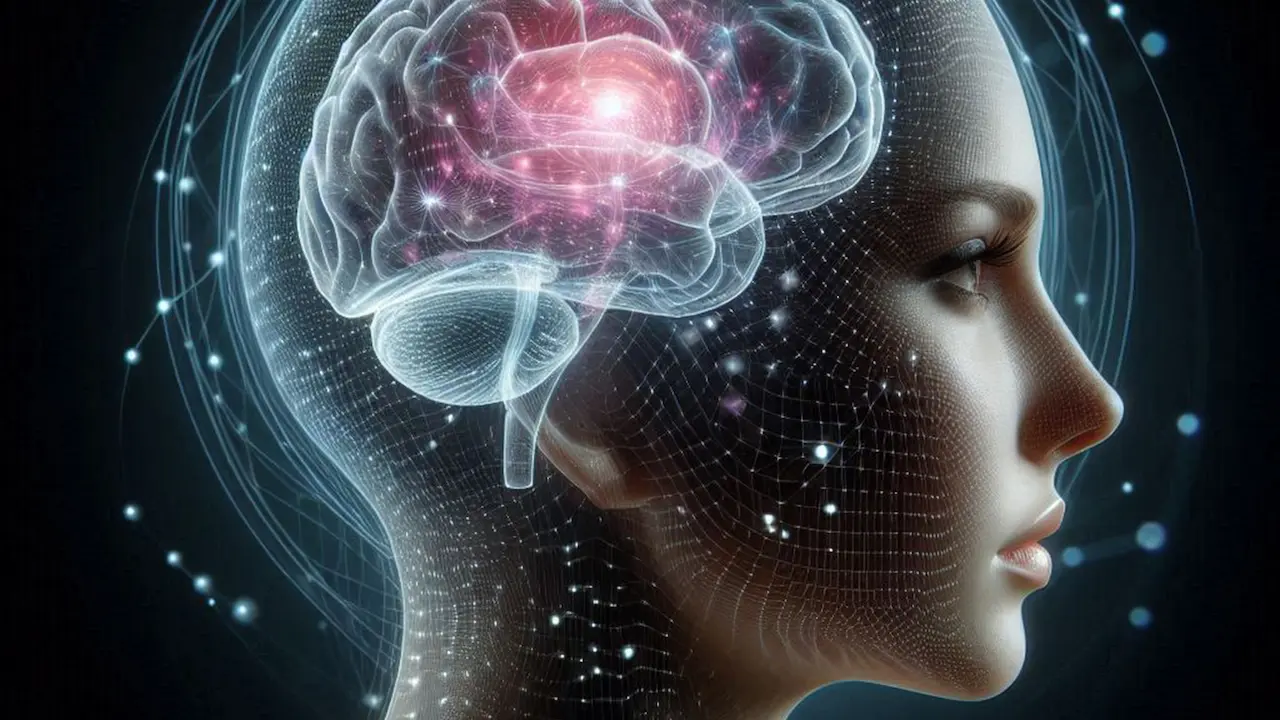
The human body operates on a roughly 24-hour cycle regulated by the Suprachiasmatic Nucleus (SCN) in the brain.
- Melanopsin Sensitivity: Our retinas contain specialized cells called Intrinsically Photosensitive Retinal Ganglion Cells (ipRGCs). These cells are uniquely sensitive to blue light (around 480 nm). When triggered, they send a direct signal to the SCN to stop the production of melatonin.
- The “Phase Response Curve”: Research in The Lancet suggests that light exposure has different effects depending on when it occurs. Light in the evening delays the clock (makes you stay up later); light in the early morning advances it (makes you wake up earlier).
- Airport Environment: Most modern airports utilize cool-white LEDs. While energy-efficient, these lights peak in the blue spectrum. Travelers sitting in a brightly lit terminal at 11 PM are essentially sending a “high noon” signal to their brain, freezing their circadian adjustment.
What This Means for You
If you’ve ever felt “tired but wired” after a long-haul flight, you’ve experienced a light-induced circadian break. Your body is exhausted, but because you were staring at a bright seatback screen or sitting under harsh terminal lights, your brain thinks the sun is still up. You aren’t just tired from travel; you are biologically confused.
Scroll-Hook Paragraph
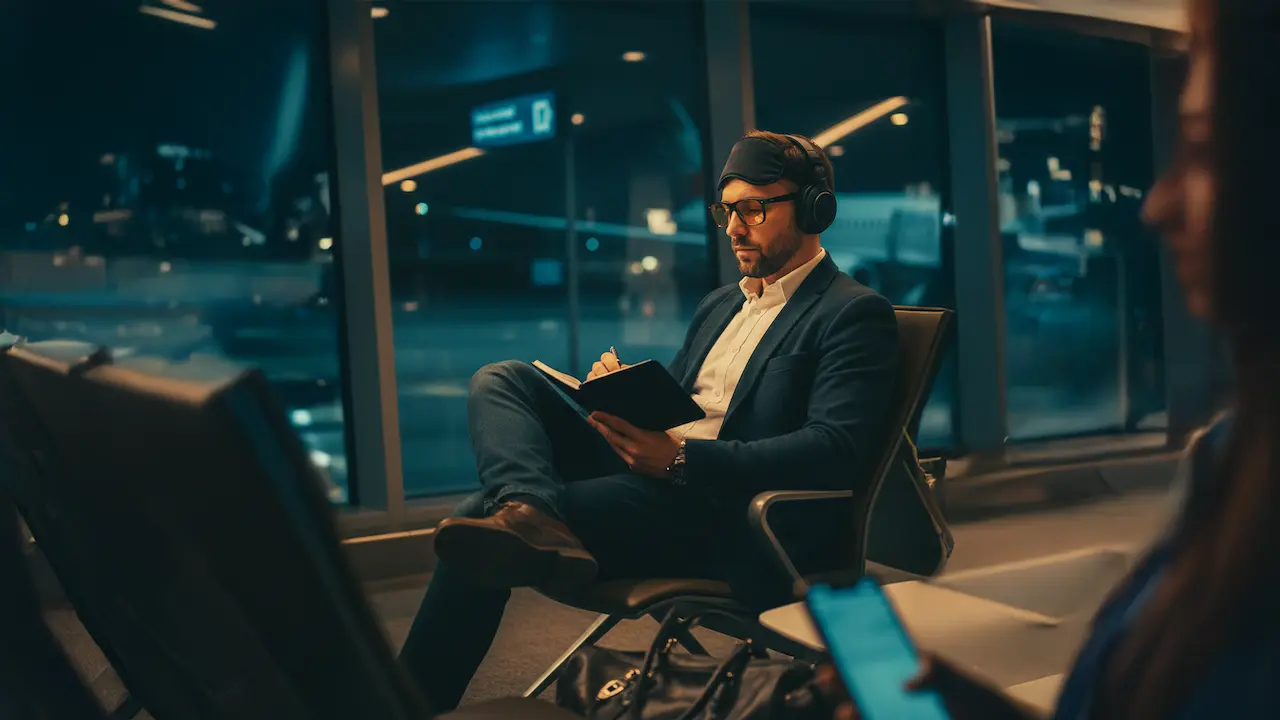
Imagine sitting in a terminal during a midnight layover. You’re nursing a coffee under a fluorescent hum that feels like a surgical suite. You feel a strange sense of clarity, almost a second wind—until you board the plane and realize your body has no idea what “night” feels like anymore. You’ve just fallen into the blue light trap.
Comparison Table (Visual Logic)
| Person Type | What to consider | Why it’s supported by evidence |
| Busy (Short Haul) | Dim phone brightness immediately. | Minimizes acute melatonin suppression during short transitions. |
| Serious (Long Haul) | Use blue-blocking glasses in terminals. | Filters the specific wavelengths that trigger the “awake” signal to the SCN. |
| Beginner | Seek a window seat for morning arrivals. | Natural sunlight is 100x stronger than cabin light and is the best “reset” button. |
Actionable Protocol (Realistic)
- The Pre-Flight Shift: Two days before travel, shift your light exposure (dimmer earlier if going East, brighter later if going West).
- The Terminal Shield: Wear orange-tinted glasses or dark sunglasses if you are in the airport during what should be your destination’s nighttime.
- The First Morning Rule: Upon arrival, get 20 minutes of direct sunlight without sunglasses to “anchor” your clock to the new location.
- If you’re busy: Set your devices to “Permanent Night Shift” the moment you leave for the airport.
- If you’re serious: Use a circadian-timing app (like Timeshifter) to see exactly when to seek light and when to avoid it based on your flight path.
- If you’re a beginner: Simply turn off your seatback screen and use an eye mask the moment the “night” phase of your flight begins.
Anti-Hype Filter
- Pros: Strategic light management is more effective than melatonin pills for long-term adjustment.
- Cons: It can be socially awkward to wear sunglasses indoors, and airport design often makes avoiding bright light nearly impossible.
- Limitations: Light is the primary “Zeitgeber” (time-giver), but food and exercise also play roles; light alone won’t solve 100% of jet lag.
FAQ
Does “Night Mode” on my phone really help?
It helps by reducing the intensity of blue light, but it doesn’t eliminate it. It’s better than full brightness, but total avoidance is still king for jet lag.
Why does my jet lag feel worse flying East?
It is physically harder for the human clock to “shorten” its day (flying East) than to “lengthen” it (flying West). Blue light in the evening makes this “shortening” almost impossible.
Final Takeaway
Jet lag is a biological conflict between your internal rhythm and external environment. The blue light found in airports and on screens acts as a powerful “stay awake” signal that prevents your brain from syncing with your destination. By controlling your light environment—using sunglasses in terminals and seeking sun upon arrival—you can significantly reduce recovery time and protect your body clock.