Vital Summary
- Dopamine vs. Melatonin: High-intensity gaming triggers dopamine, which chemically opposes the onset of sleep.
- Light Intensity: The proximity of a monitor suppresses melatonin more effectively than a TV across the room.
- Architecture Shift: Late-night gaming can delay the first cycle of Deep Sleep, reducing physical recovery.
- Cognitive Arousal: The “fight-or-flight” response from competitive play keeps the heart rate elevated for hours.
Quick Answer: How does gaming change sleep?
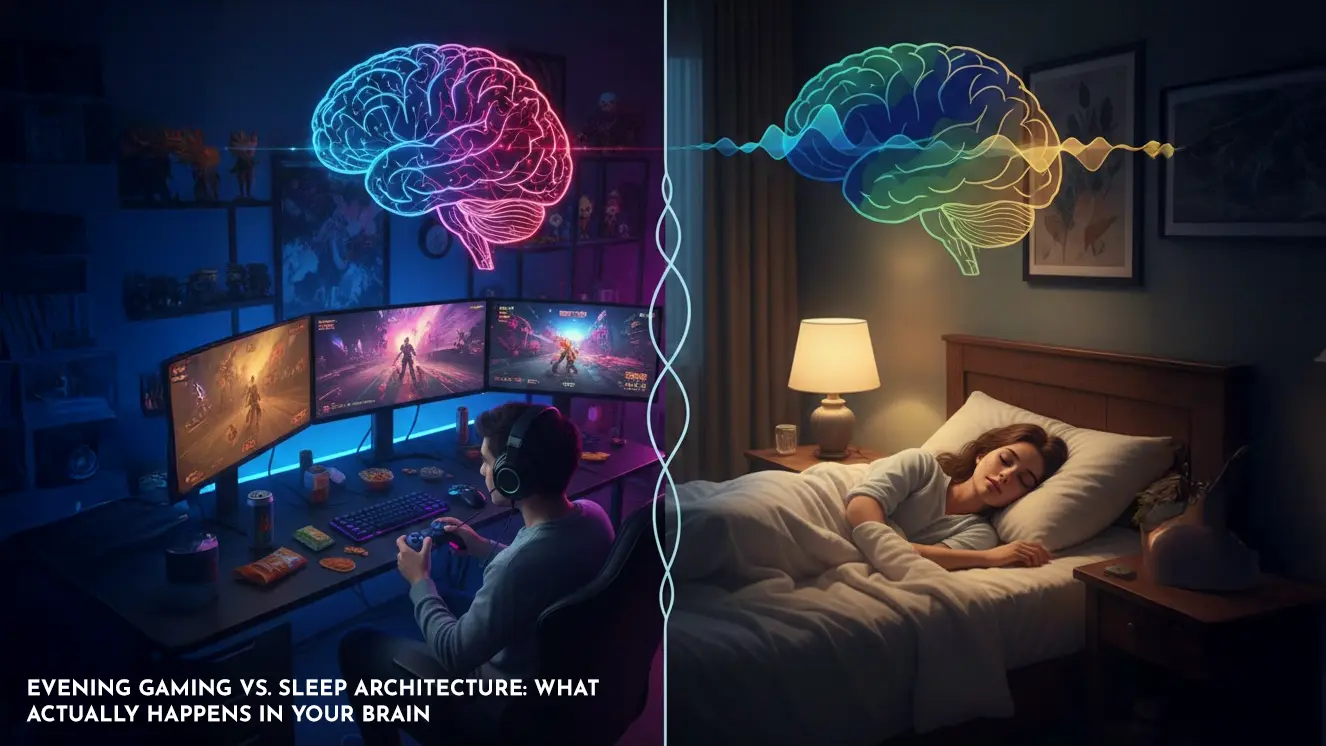
Gaming before bed disrupts “sleep architecture”—the specific structure of your 90-minute sleep cycles. High-octane gameplay keeps the brain in a state of high-frequency Beta wave activity. This makes it harder to transition into the “Slow Wave Sleep” (Deep Sleep) necessary for physical repair and “REM Sleep” necessary for emotional processing, leading to that “hungover” feeling the next morning.
The Science Behind This: The Cost of High-Stakes Play
Sleep isn’t just “off time”; it is a complex series of stages. Gaming at night acts as a biological “disruptor” across three main systems.
1. The Suppression of Melatonin
Gaming monitors are typically positioned 20–30 inches from the face. This proximity increases the “lux” (light intensity) hitting the retina. According to the Journal of Clinical Endocrinology & Metabolism, this intense light can suppress melatonin levels by up to 50%, delaying sleep onset by an average of 30 to 60 minutes (Gooley et al., 2011).
2. Deep Sleep Deferral
When you finally fall asleep after a high-intensity session, your brain is often still processing the rapid visual inputs and motor demands. This “cognitive arousal” can shorten the duration of Stage 3 (NREM) sleep—the deep, restorative stage where the body repairs tissue and boosts the immune system.
3. The Sympathetic Nervous System (SNS)
Competitive gaming (eSports or Battle Royales) activates the SNS. Your brain releases cortisol and adrenaline to help you react quickly. Research in Psychophysiology shows that even after the game is turned off, the heart rate remains elevated, and “vagal tone” (your body’s ability to relax) remains low, preventing the brain from entering the “cool down” phase required for sleep (Higuchi et al., 2005).
What This Means for You
Have you ever noticed that after a late-night session, you might sleep for 8 hours but still wake up feeling exhausted and irritable? This is because you didn’t have “quality” sleep; you had “sedated” sleep. Your brain was so overstimulated that it spent the first half of the night just trying to calm down rather than performing the deep cleaning (glymphatic clearance) it usually does during the early cycles of the night.
The Scroll-Hook: A Relatable Moment
We’ve all been there: It’s 11:30 PM, you lose a close match, and you think, “I can’t end on a loss.” Or worse, you win, and the adrenaline surge makes you feel like you could run a marathon. You lie in bed ten minutes later, staring at the ceiling, seeing the game’s UI burned into your “mind’s eye.” This isn’t just excitement—it’s a brain that has been told it’s in a high-stakes survival situation, and it refuses to let its guard down.
Visual Logic: Matching Game Type to Sleep Quality
| Person Type | What to consider | Why it’s supported by evidence |
| The Competitive Gamer | Stop “ranked” play 2 hours before bed; switch to “casual” or “co-op.” | High-stakes competition spikes cortisol, which inhibits the transition to NREM sleep. |
| The RPG/Story Lover | Dim the monitor brightness and use “warm” color profiles. | Lower lux levels and warmer wavelengths reduce the impact on the suprachiasmatic nucleus (the brain’s clock). |
| The Casual Mobile Player | Use a blue light filter and keep the phone at least 12 inches away. | Distance reduces light density, causing less aggressive melatonin suppression (Wood et al., 2013). |
Simple Action Plan: The “Gamers’ Wind-Down”
- The 60-Minute Buffer: Turn off the console/PC one hour before your target sleep time.
- The “Bridge” Activity: Spend 20 minutes on a low-stimulation activity (reading a physical book or a podcast) to allow adrenaline to dissipate.
- Cool the Core: Take a warm shower. The subsequent drop in body temperature after you get out signals to the brain that it is time for sleep.
If you’re busy: The Brightness Hack
If you absolutely must play late, turn your monitor brightness down to 20%. It won’t stop the dopamine, but it will significantly reduce the light-driven melatonin suppression.
If you’re serious: The “Last Match” Rule
Set a hard “No New Games” rule after 10:30 PM. Use the remaining time for “inventory management” or “base building”—low-stakes tasks that allow your heart rate to normalize.
If you’re a beginner: Blue Light Filters
Enable the “Night Mode” on your Windows/Mac/Console settings. It won’t fix the excitement, but it protects your internal clock from the harshest blue frequencies.
Pros & Cons of Late-Night Gaming
Pros:
- Stress Relief: Can provide a necessary social outlet and mental escape after a long day.
- Skill Maintenance: Late nights are often when friends are available for team-based play.
Cons:
- Sleep Fragmentation: You may wake up more frequently during the night.
- Reduced REM: Impact on memory consolidation and emotional regulation the next day.
- Delayed Sleep Phase: Can lead to a permanent shift in your internal clock, making 9 AM starts difficult.
FAQ
Does the genre of the game matter?
Absolutely. A study in Sleep Medicine found that “passive” or “slow” games (like simulations or turn-based strategy) have a significantly lower impact on sleep onset than fast-paced shooters or horror games.
Can I just use blue light glasses and play until 2 AM?
Not exactly. Blue light glasses help with the light aspect, but they do nothing to stop the dopamine and adrenaline produced by the gameplay itself. Your brain stays “awake” because of the activity, not just the light.
Final Takeaway
Evening gaming disrupts sleep architecture by combining intense light exposure with high cognitive arousal. This suppresses melatonin and keeps the sympathetic nervous system active, delaying the onset of restorative Deep Sleep. By implementing a “wind-down” period and shifting to lower-intensity games toward the end of the night, you can enjoy your hobby without sacrificing the biological recovery your brain needs.
References
- Gooley, J. J., et al. (2011). Exposure to Room Light before Bedtime Suppresses Melatonin Onset. The Journal of Clinical Endocrinology & Metabolism. https://doi.org/10.1210/jc.2010-2098
- Higuchi, S., et al. (2005). Effects of VDT tasks with a bright display at night on melatonin, core temperature, and sleepiness. Psychophysiology. https://doi.org/10.1111/j.1469-8986.2005.00268.x
- Wood, B., et al. (2013). Light level and duration of exposure determine the impact of self-luminous tablets on melatonin suppression. Applied Ergonomics. https://doi.org/10.1016/j.apergo.2012.07.008