Vital Summary
- The Body’s Armor: Jaw clenching is an evolutionary “guarding” reflex designed to protect your throat and skull during perceived threats.
- The Masseter Powerhouse: The jaw muscles are among the strongest in the human body relative to size; chronic tension here can trigger systemic headaches and neck pain.
- The Trigeminal Connection: Stress signals travel via the trigeminal nerve, creating a feedback loop where a tight jaw signals the brain to stay in “high alert.”
- The “N” Position: Simply learning the correct resting position for your tongue can break the neurological circuit of stress-induced clenching.
The Science Behind This
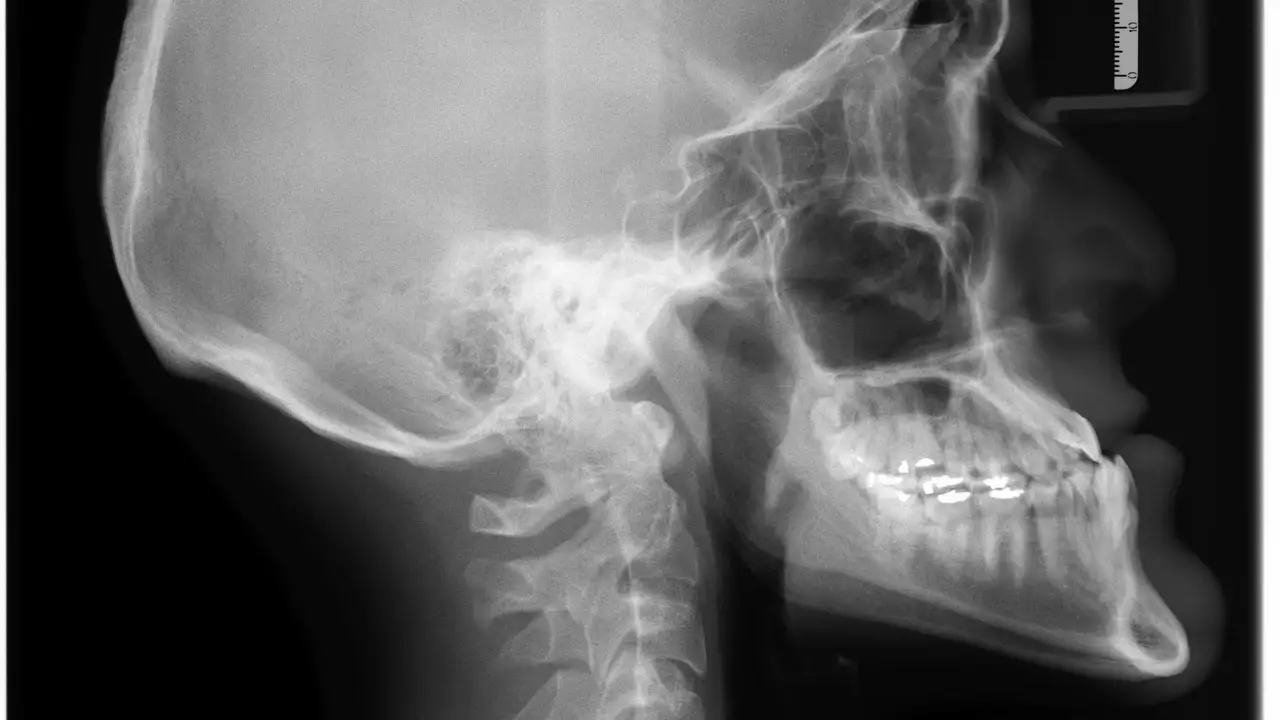
When you encounter stress, your body doesn’t distinguish between a prehistoric predator and a modern-day deadline. The response is the same: activation of the Sympathetic Nervous System. One of the most immediate, yet often unconscious, reactions is the tightening of the muscles around the Temporomandibular Joint (TMJ).
- The Muscle Guarding Reflex: This is a biological “bracing” for impact. In the animal kingdom, the jaw and neck are vulnerable areas. By clenching, the body stabilizes the skull and protects the throat. Unlike an acute threat that passes, modern “micro-stressors” (emails, traffic) keep these muscles in a state of semi-contraction for hours.
- The Masseter and the HPA Axis: The masseter muscle—the primary muscle for chewing—is incredibly powerful. When the Hypothalamic-Pituitary-Adrenal (HPA) axis (your stress response system) is active, it sends direct signals to the motor neurons governing the jaw.
- The Trigeminal Nerve Loop: The trigeminal nerve, which controls the jaw, has a direct “hotline” to the brain’s emotional center (the limbic system). This creates a bidirectional loop: stress makes your jaw tight, but a tight jaw sends signals back to the brain saying, “We are still in danger,” preventing you from down-regulating even after the stress is gone.
- Fascial Continuity: Your jaw is part of the “Deep Front Line” of fascia—connective tissue running from the jaw through the throat, heart, and diaphragm. This is why jaw tension is almost always accompanied by shallow, upper-chest breathing.
What This Means for You
If you find yourself rubbing your temples or dealing with “unexplained” earaches, your jaw is acting as a stress barometer. It is often the first place the body stores tension and the last place we think to relax.
When the jaw is locked, the neck muscles often overcompensate to hold the head up, leading to “tech neck” or forward head posture. Understanding that this tension is a reflex—not just a bad habit—is the first step. You aren’t “doing” the clenching; your nervous system is trying to protect you. By manually releasing the jaw, you send a physical signal to your brain that the “threat” has passed.
Comparison Table (Visual Logic)
| Person Type | What to consider | Why it’s supported by evidence |
| If you’re busy | The “Lips Together, Teeth Apart” Rule | Keeping a tiny gap between teeth prevents the masseter from fully engaging and firing stress signals. |
| If you’re serious | Intra-oral Massage | Releasing the muscle from inside the mouth reaches deep fibers that external rubbing cannot. |
| If you’re a beginner | Posture & Phone Check | Looking down at a phone doubles the weight on the jaw/neck; holding it at eye level reduces the “bracing” reflex. |
Simple Action Plan (1–2–3)
- The “N” Position: Say the letter “N” and notice where your tongue goes. The tip should rest gently on the ridge behind your upper teeth. This is the neutral position. It is physiologically difficult to clench your jaw while your tongue is in this position.
- The “Jaw Drop” Breath: Inhale through your nose; as you exhale through your mouth, let your jaw drop open slightly as if you are sighing. Imagine the weight of your lower jaw pulling away from your skull.
- Heat Therapy: Apply a warm, damp cloth to the sides of your face for 10 minutes before bed. Heat increases blood flow to the masseter, helping to flush out metabolic waste from chronically tight muscles.
If you’re busy:
Set a “Jaw Check” reminder on your phone every 60 minutes. When it goes off, take one deep breath and intentionally drop your shoulders and jaw. This prevents tension from “compounding” over an 8-hour day.
If you’re serious:
Incorporate a 5-minute facial release into your evening routine. Using clean hands, find the “knot” in your cheek, apply gentle pressure, and slowly open and close your mouth. This manual release helps “re-set” the resting length of the muscle.
Pros & Cons
Pros of releasing jaw tension:
- Immediate reduction in tension headaches and “ear fullness.”
- Improved breathing quality and lower heart rate.
- Protection against long-term tooth wear and enamel loss.
Cons/Caveats:
- Emotional Release: Because the jaw is linked to the limbic system, some people experience “unexplained” frustration or even tears when the muscles finally release. This is a normal part of processing stored stress.
- Structural Issues: While most tension is stress-related, severe clicking or “locking” may require a consultation with a TMJ specialist.
References
- National Institute of Dental and Craniofacial Research (NIDCR): TMJ Disorders Overview
- Mayo Clinic: Symptoms and Causes of TMJ
- Cleveland Clinic: The Link Between Stress and Facial Pain