Vital Summary
- The Biological Anchor: For millennia, human sleep was anchored by the sun and fire; modern artificial light has effectively “erased” night for our brains.
- Spectrum Shift: Modern LED and screen lighting is heavy in blue wavelengths, which the brain interprets as high-noon sunlight, even at midnight.
- Melatonin Delay: Artificial light exposure pushes our internal clock later, causing “Social Jetlag” where our biological time and social time are out of sync.
- Restoring the Rhythm: Returning to a “Paleolithic” light environment in the evening can rapidly fix sleep onset and quality issues.
The Science Behind This
Before the invention of the incandescent bulb in 1879, the human “light diet” was simple: bright, full-spectrum sunlight by day and low-intensity, amber-hued firelight by night. Our biology evolved to use these specific signals to coordinate internal chemistry.
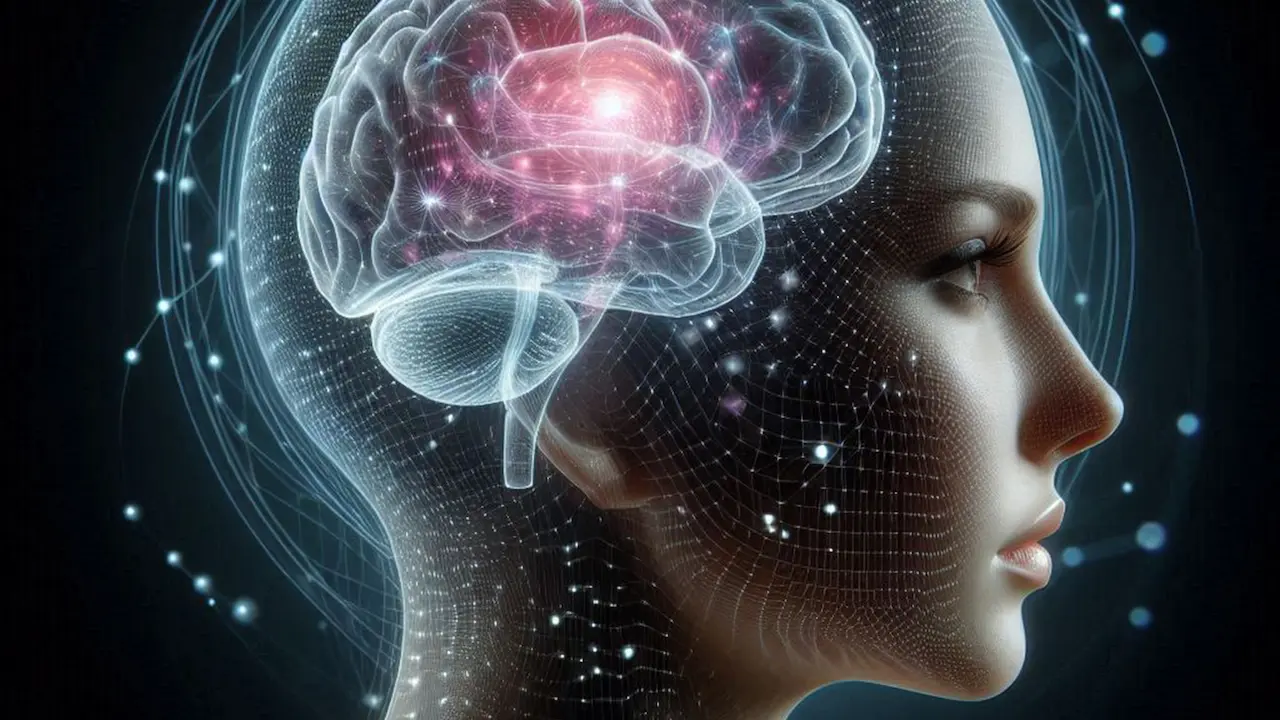
- The Intrinsically Photosensitive Retinal Ganglion Cells (ipRGCs): These are not the cells you use to “see” shapes. Instead, they detect the presence of short-wavelength blue light. When these cells detect blue light, they send a signal to the Suprachiasmatic Nucleus (SCN) to suppress melatonin.
- The Intensity Problem: In the pre-modern world, a campfire provided about 10–50 lux (a measure of light intensity) and contained almost no blue light. A modern living room or a smartphone screen can deliver hundreds of lux directly into the eye, containing enough blue light to trick the brain into thinking the sun hasn’t set.
- Phase Shifting: Research from The Journal of Clinical Endocrinology & Metabolism found that room light alone can delay the start of melatonin flow by up to 90 minutes. This shift means that even if you go to bed at 11 PM, your brain might not start its “deep cleaning” and repair processes until 12:30 AM or later.
Key Citations:
- Gooley, J. J., et al. (2011). Exposure to room light before bedtime suppresses melatonin onset. Journal of Clinical Endocrinology & Metabolism.
- Duffy, J. F., & Czeisler, C. A. (2009). Effect of Light on Human Circadian Physiology. Sleep Medicine Clinics.
- National Institute of General Medical Sciences: Circadian Rhythms and Light.
What This Means for You
We are currently living in a “global experiment” of light. By extending the day artificially, we have gained productivity but lost sleep architecture.
When your brain is exposed to cool, bright light late at night, it doesn’t just make it “harder to fall asleep.” It degrades the quality of that sleep. This mismatch leads to Social Jetlag—the feeling of being permanently exhausted on Monday morning because your internal clock shifted two hours later over the weekend due to late-night light exposure.
This isn’t just about feeling tired; chronic light-induced sleep disruption is linked to metabolic dysfunction because the liver and gut “clocks” take their cues from the master clock in the brain.
Comparison Table (Visual Logic)
| Person Type | What to consider | Why it’s supported by evidence |
| If you’re busy | The “Lamp-Only” Rule | Switching from overhead lights to low-level floor lamps reduces lux reaching the ipRGCs. |
| If you’re serious | Blue-Blocking Glasses | High-quality amber lenses filter out the specific 450-480nm wavelengths that suppress melatonin. |
| If you’re a beginner | Morning Sunlight Exposure | Getting bright light at 7 AM makes the brain less sensitive to the negative effects of light at 7 PM. |
Simple Action Plan (1–2–3)
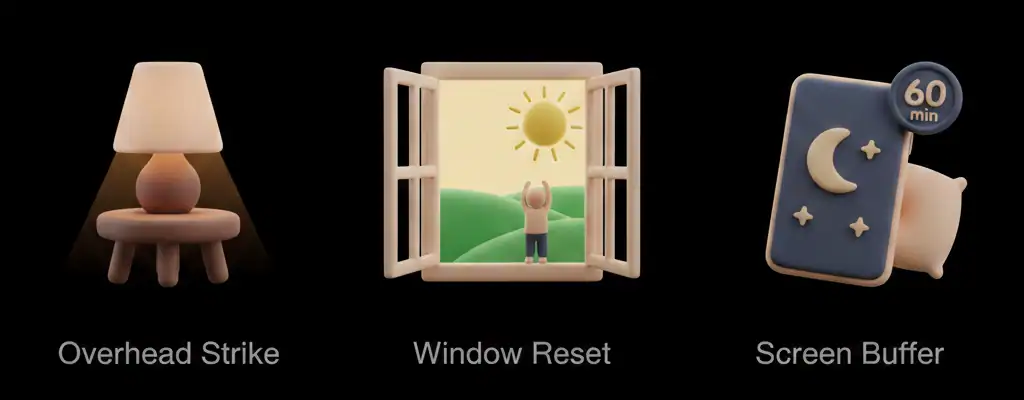
- The Overhead Strike: After 8 PM, turn off all overhead “big lights.” Use dim, warm-colored table lamps situated below eye level.
- The Window Reset: Spend 15 minutes outside every morning. This “anchors” your clock, making it more resilient to artificial light later in the day.
- The 60-Minute Screen Buffer: Put your phone away one hour before bed. If you must use a screen, use “Night Mode” and lower the brightness to the absolute minimum.
If you’re busy:
Swap the bulbs in your bedside lamps for “warm” or “amber” LED bulbs (2700K or lower). It’s a one-time change that protects your melatonin every single night.
If you’re serious:
Invest in a “Sunrise Alarm Clock.” It mimics the natural, gradual increase of light in the morning, which helps clear adenosine (sleep pressure) more effectively than a jarring sound alarm, making you feel alert immediately.
If you’re a beginner:
Just dim your phone. Most people keep their screens at 50-80% brightness at night. Dropping it to 10% significantly reduces the “alertness” signal sent to your brain.
Pros & Cons
Pros of optimizing your light environment:
- Falling asleep significantly faster (reduced sleep latency).
- Improved “Morning Alertness” (less grogginess).
- Stabilized mood and reduced evening anxiety.
Cons/Caveats:
- Social Friction: It can be difficult to explain to family or roommates why you’re turning all the lights down at 8:30 PM.
- Seasonal Shifts: In winter, the lack of morning sun makes the evening “darkness” even more important, but harder to balance with low moods.
References
- Harvard Health: Blue light has a dark side
- ScienceDaily: How light pollution disrupts human sleep
- Journal of Biological Rhythms: Light and the Circadian System