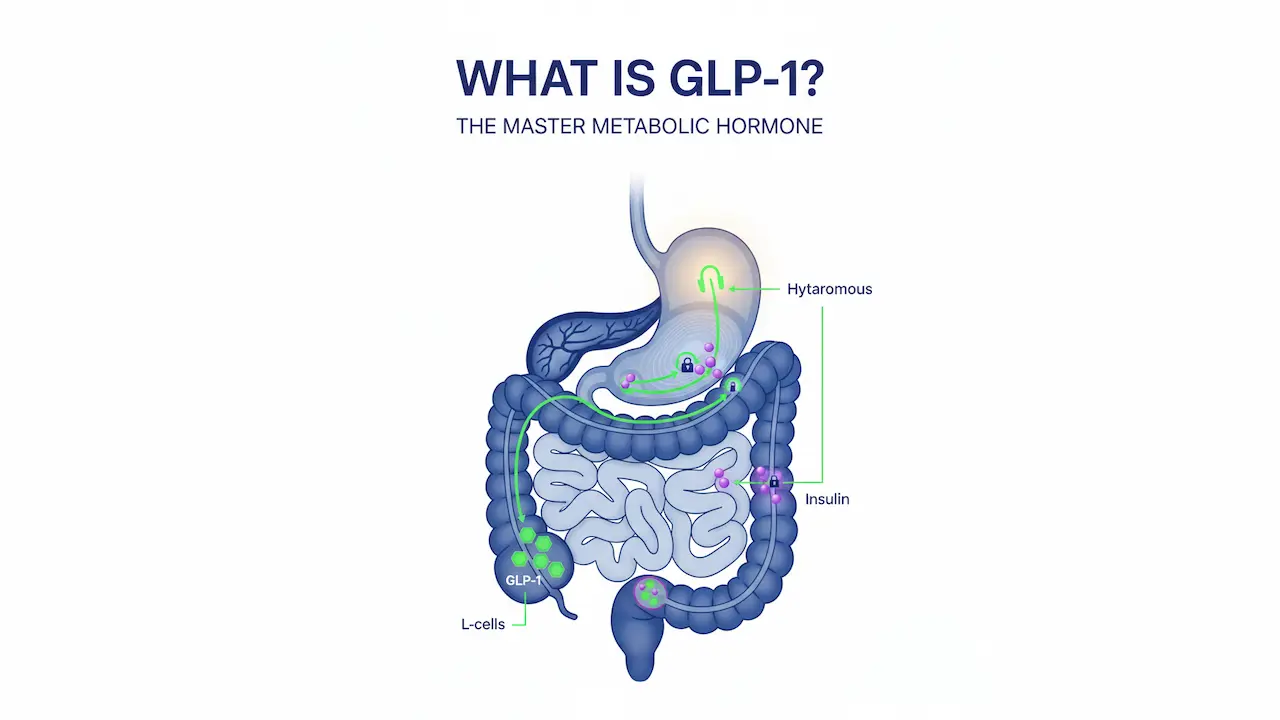
In the context of metabolic biology, GLP-1 (Glucagon-like Peptide-1) is a potent incretin hormone—a type of signaling molecule produced in the gut that stimulates insulin secretion in response to food intake.
It plays a central role in maintaining glucose homeostasis (blood sugar balance) and regulating appetite. While it is naturally produced by the human body, it has become a major focus of medical research and pharmaceutical development for the treatment of Type 2 diabetes and obesity.+1
Objective Definition
GLP-1 belongs to the category of peptide hormones and specifically the incretin class.
- Classification: It is a 30- or 31-amino acid long peptide derived from the transcription of the proglucagon gene.
- Fundamental Role: Its primary function is to optimize the body’s response to nutrients. When we eat, GLP-1 is released to tell the pancreas to produce insulin, tell the liver to stop producing unnecessary glucose, and tell the brain that the body is satiated.
Mechanism of Action
GLP-1 operates through a well-defined physiological sequence across multiple organ systems:
Synthesis and Secretion
GLP-1 is synthesized primarily in the L-cells of the distal ileum and colon (the lower parts of the small and large intestines). It is secreted into the bloodstream within minutes of ingesting carbohydrates or fats.
Receptor Interaction
The hormone travels through the blood and binds to GLP-1 receptors (GLP-1R) located on the surface of various cells, most notably:
- Pancreatic Beta Cells: Triggers the release of insulin.
- Pancreatic Alpha Cells: Inhibits the release of glucagon (a hormone that raises blood sugar).
- Central Nervous System (Hypothalamus): Signals fullness and reduces food seeking.
- Stomach: Slows down gastric emptying, meaning food stays in the stomach longer.
Downstream Effects
The activation of these receptors leads to several biological outcomes:
- Glucose-Dependent Insulin Secretion: It only stimulates insulin when blood sugar is high, which significantly reduces the risk of hypoglycemia (dangerously low blood sugar).
- Satiety: By acting on the brain’s reward and hunger centers, it lowers caloric intake.
- Metabolic Efficiency: It improves how the body processes sugar and reduces the “dumping” of sugar from the liver.
Evolution of Understanding
The incretin effect—the observation that oral glucose causes a much higher insulin response than intravenous glucose—was first noted in the 1960s. However, GLP-1 itself was not isolated and characterized until the early 1980s.
Initial research focused strictly on its role in diabetes management. Over time, scientists observed that subjects receiving GLP-1 based therapies also experienced significant weight loss and cardiovascular benefits. This shifted the consensus from viewing GLP-1 solely as a “blood sugar regulator” to recognizing it as a systemic metabolic regulator.
Observed Data & Documented Findings
Extensive clinical data from large-scale trials (such as the STEP and SUSTAIN trials) have documented the following:
- HbA1c Reduction: Consistent evidence shows that modulating the GLP-1 pathway effectively lowers long-term blood sugar markers in patients with Type 2 diabetes.
- Weight Management: Large observational studies and randomized controlled trials show a documented decrease in body mass index (BMI) due to delayed gastric emptying and central nervous system appetite suppression.
- Cardiovascular Health: Recent data suggests a “cardioprotective” effect, showing a reduction in major adverse cardiovascular events (MACE) like heart attacks and strokes in high-risk populations.
The Two-Sided View (Balance Table)
| Documented Observations / Potential Benefits | Reported Risks / Adverse Effects |
| Glucose Control: Highly effective at lowering post-meal blood sugar levels. | Gastrointestinal Distress: Nausea, vomiting, and diarrhea are the most frequently reported side effects. |
| Satiety: Significant documented reduction in appetite and “food noise.” | Delayed Gastric Emptying: While beneficial for fullness, it can cause severe indigestion or “stomach paralysis” in rare cases. |
| Cardiovascular Protection: Observed reduction in systemic inflammation and blood pressure. | Muscle Mass Loss: Rapid weight loss associated with GLP-1 activity can include a loss of lean muscle tissue if protein intake is not maintained. |
| Low Hypoglycemia Risk: Unlike older insulin-stimulating drugs, GLP-1 activity is glucose-dependent. | Long-term Uncertainty: While established for diabetes, the effects of multi-decade use specifically for weight loss are still being tracked. |
Certainties vs. Variables
What science is confident about:
- The Incretin Effect: The role of GLP-1 in glucose-dependent insulin secretion is a settled biological fact.
- Rapid Degradation: Natural GLP-1 produced by the body is broken down in minutes by an enzyme called DPP-4.
- Receptor Location: We have successfully mapped the GLP-1 receptors in the gut, brain, and heart.
What remains under study:
- Neuroprotective Qualities: Emerging research is investigating whether GLP-1 interaction in the brain could slow neurodegenerative diseases like Parkinson’s or Alzheimer’s.
- Individual Variability: It is not yet fully understood why some individuals experience profound metabolic shifts while others experience minimal effects.
- Compound Synergy: Research is ongoing into how GLP-1 interacts when combined with other hormones like GIP (Gastric Inhibitory Polypeptide).
REFERENCES
Glucagon-like Peptide-1 (GLP-1) – National Institutes of Health (NIH)
https://www.ncbi.nlm.nih.gov/books/NBK551568
The Incretin System – American Diabetes Association (ADA)
https://professional.diabetes.org/content-page/incretin-system
GLP-1 Receptor Agonists and Cardiovascular Outcomes – New England Journal of Medicine (NEJM)
https://www.nejm.org/doi/full/10.1056/NEJMoa1607141
The discovery and development of GLP-1 – Nature Reviews Endocrinology
https://www.nature.com/articles/nrendo.2012.34