Vital Summary
- Retinal Safety: Current evidence shows screen blue light is not intense enough to damage a child’s retina.
- Sleep Disruption: Evening exposure suppresses melatonin, making it harder for children to fall asleep.
- Myopia Risk: The real risk isn’t the light itself, but the lack of outdoor time and close-up viewing.
- Simple Fixes: Consistent breaks and evening “tech curfews” solve most light-related issues.
Quick Answer
Scientific consensus from organizations like the American Academy of Ophthalmology suggests that blue light from screens does not cause physical eye disease or permanent damage in children. The “damage” people fear is often actually digital eye strain or sleep delay. While screens aren’t “blinding” our children, they do disrupt sleep cycles and replace the outdoor light necessary for healthy eye development.
The Science Behind This
When we talk about blue light, we are discussing High-Energy Visible (HEV) light. It is a natural part of the light spectrum—the sun is actually our largest source of it.
- Retinal Impact: While lab studies on cells in a dish show that blue light can cause oxidative stress, these experiments do not mimic the conditions of a human eye looking at a tablet. Peer-reviewed research (AAO, 2025) confirms that the intensity of blue light from consumer electronics is significantly lower than that of daylight and is not sufficient to cause retinal damage.
- Melatonin Suppression: Children’s eyes have larger pupils and clearer lenses than adults, making them more sensitive to light. Research published in JAMA Pediatrics (2024) indicates that evening blue light exposure can suppress melatonin—the hormone that signals sleep—more aggressively in children than in adults, leading to delayed sleep onset.
- The Myopia Connection: The rise in nearsightedness (myopia) is linked more to “near-work” (holding a screen too close) and a lack of natural outdoor light. Sunlight triggers dopamine release in the retina, which helps the eye maintain its correct shape. Screens aren’t damaging the eye so much as they are keeping children away from the light that protects it.
[Related: Sleep & Rhythm] [Related: Sleep & Rhythm]
What This Means for You
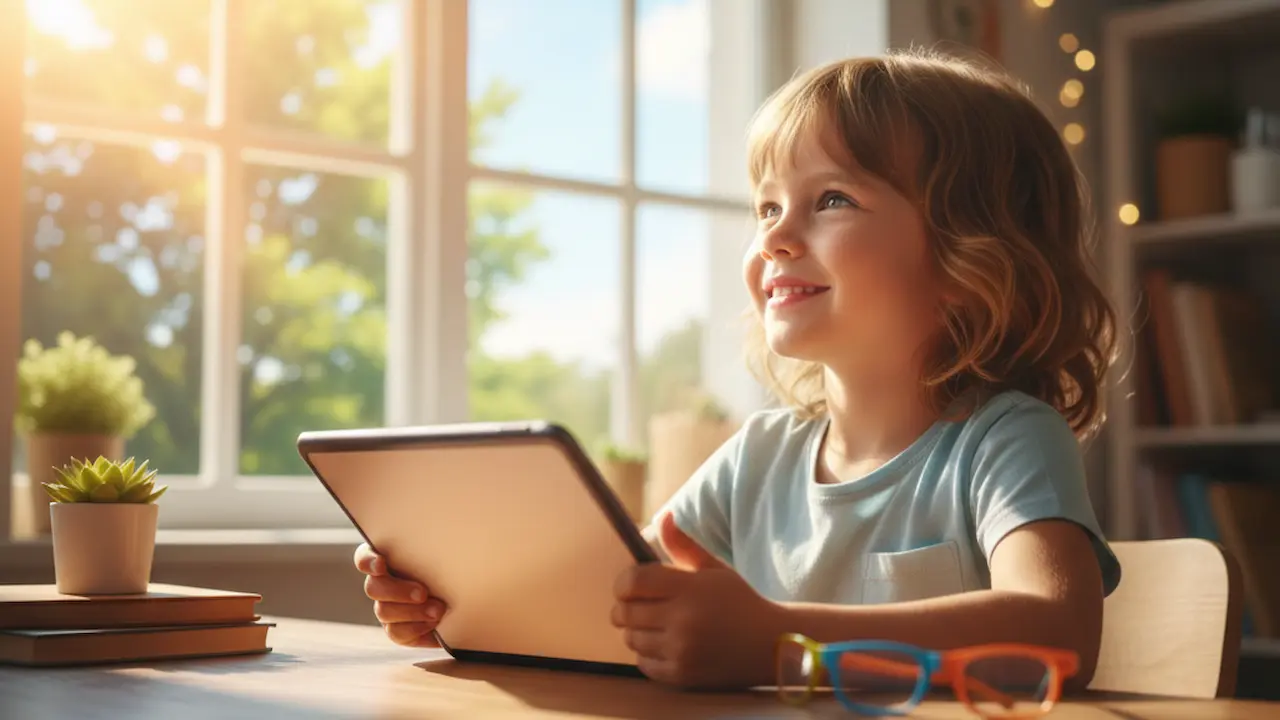
For most parents, the fear that a tablet is “burning” their child’s eyes can be set aside. The real concern is behavioral. If your child is cranky, rubbing their eyes, or struggling to fall asleep, the issue is likely the timing and duration of the screen use, rather than a toxic property of the light itself.
Scroll-Hook Paragraph
You’ve likely seen the ads for tiny blue-light-blocking glasses and felt a pang of guilt as your child finishes a cartoon before bed. It’s easy to feel like you’re failing a hidden safety test. But rest assured: the “glow” isn’t a toxin; it’s just a signal that tells a child’s brain it’s still daytime.
Comparison Table (Visual Logic)
| Person Type | What to consider | Why it’s supported by evidence |
| Busy Parent | Use “Night Shift” or “Warm” settings. | Reduces the stimulating blue peak without needing extra gear. |
| Serious / Concerned | Prioritize 2 hours of outdoor play daily. | Sunlight is the primary driver of healthy eye growth and myopia prevention. |
| Beginner | The 20-20-20 Rule (Look away every 20 mins). | Prevents “ciliary muscle” fatigue, the main cause of digital eye strain. |
Simple Action Plan
- Implement a Tech Curfew: Turn off all emissive screens (phones, tablets, TVs) at least 60 minutes before bedtime to allow melatonin to rise naturally.
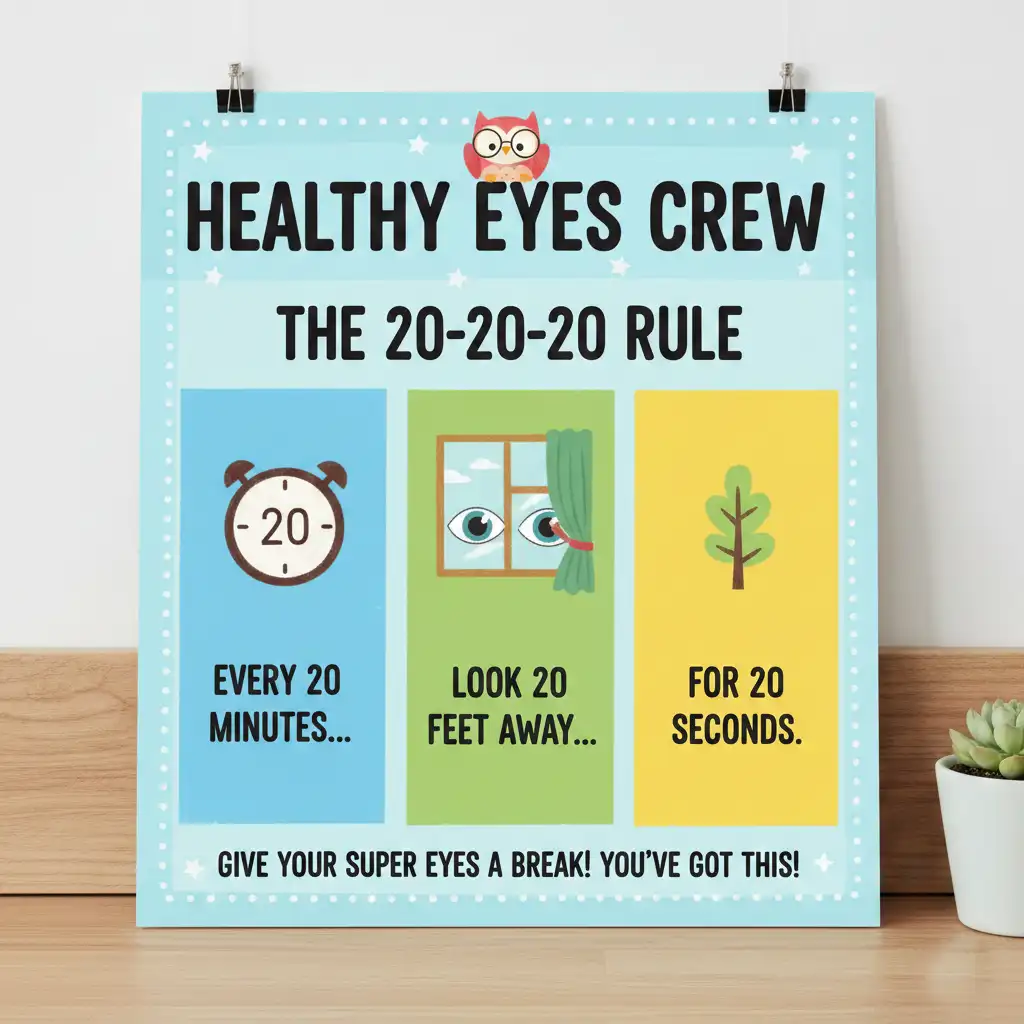
- Enforce the 20-20-20 Rule: Every 20 minutes, have your child look at something 20 feet away for 20 seconds.
- Distance Matters: Ensure handheld devices are held at least 18 to 24 inches from the face to reduce the focusing strain on the eyes.
- If you’re busy: Enable “Automatic Night Mode” on all family devices to shift colors to the warm spectrum at sunset.
- If you’re serious: Trade 30 minutes of afternoon screen time for 30 minutes of outdoor play to support the retina’s dopamine levels.
- If you’re a beginner: Simply encourage more blinking. We blink 50% less when looking at screens, which is the #1 cause of dry, itchy eyes.
Pros & Cons of Blue Light
- Pros: Daytime blue light (from the sun) boosts mood, improves alertness, and helps regulate a healthy circadian rhythm. It is essential for child development.
- Cons: Nighttime artificial blue light can cause “social jetlag,” making mornings difficult. Excessive “near-work” contributes to the global rise in myopia.
- Limitations: Blue-light-blocking glasses are often unnecessary for eye health and may provide a false sense of security while ignoring the need for breaks.
Final Takeaway
Blue light from screens is a sleep-cycle disruptor, not a retinal toxin. While it won’t cause permanent eye damage, it can significantly impact a child’s sleep quality and contribute to eye strain. The most effective support for a child’s vision is a balance of frequent breaks, a screen-free hour before bed, and ample time spent in natural sunlight.